
Skip to content

Warm homes, honest service, right here in Etobicoke

Phone to be confirmed 146 Thirtieth Street, Suite 207, Etobicoke, ON M8W 3C4
Etobicoke Fireplace Care

Draft page, awaiting owner approval

Water Heaters

Tankless Water Heater Repair

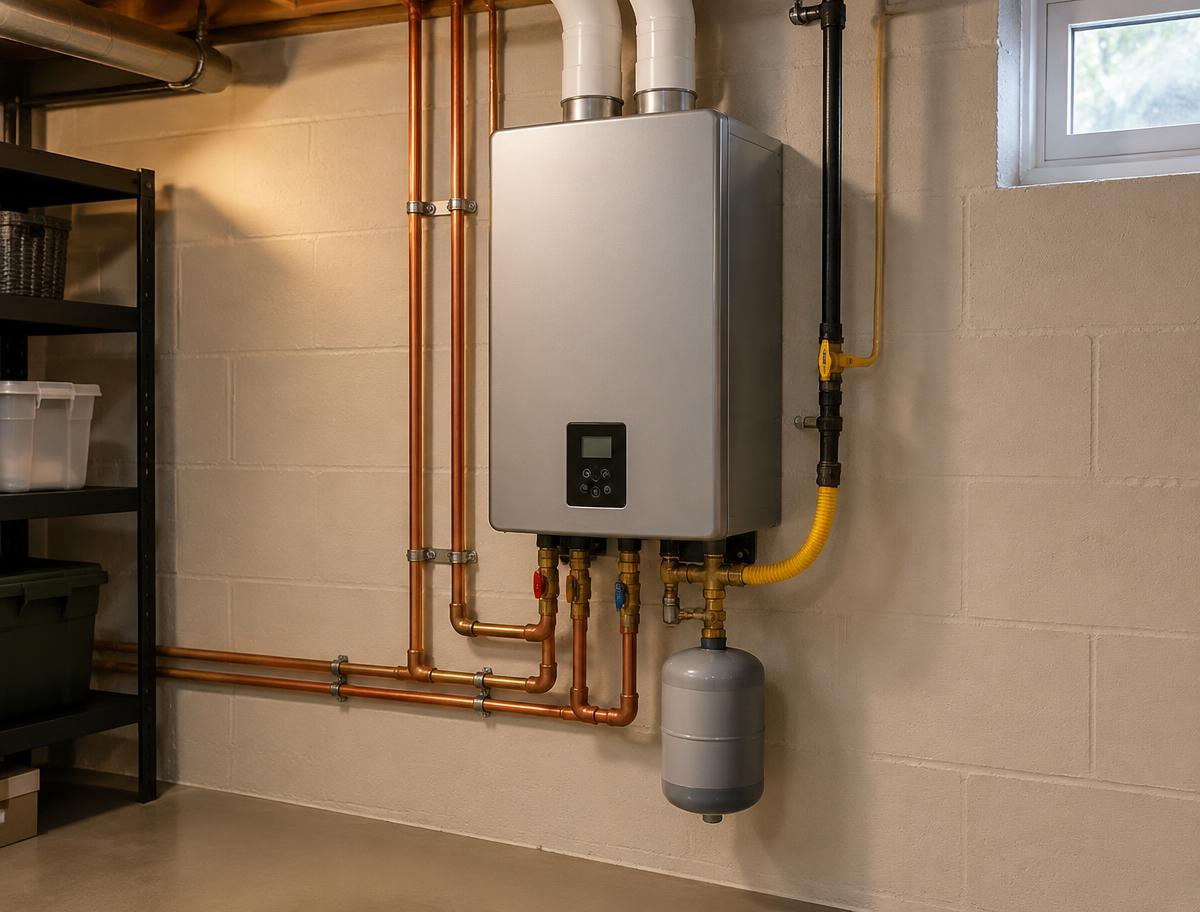
Tankless water heaters fire only when hot water is drawn, so faults show up as cold bursts, error codes or no hot water at all. Scale buildup, venting issues and flow sensors are frequent culprits.

Request a quote

A request only. We reply to confirm availability.

Phone or email is required.

Powered by GoogleAdding your address lets us route the nearest technician.

We use these details only to respond to your request. See our Privacy Policy. Smell gas? Leave and call your gas utility, do not use this form.

Signs to watch

Symptoms and when to stop using it

  • Error code
  • Hot then cold water
  • No hot water at low flow

Shut off the water heater and its supply if it leaks heavily, smells of gas, or the relief valve discharges repeatedly. Gas odours call for leaving and calling the utility.

Scope

What the visit covers, and what it does not

Typically included

  • Error code interpretation
  • Flow and ignition diagnosis
  • Scale assessment

Not included

  • Rental units owned by a rental provider

Service scope, coverage and technician qualifications for this work are awaiting owner confirmation.

Tankless Water Heater Repair

Everything you should know

Finding the fault behind an interrupted shower

When your shower turns cold halfway through, the useful question is not simply whether the heater still runs. We want to understand what changed just before the temperature dropped. A second tap opening, a brief pause in demand, an ignition attempt or a displayed code can each point towards a different problem. Tankless water heater repair begins with that sequence rather than an assumption that the heat exchanger has failed.

We approach your request by separating an appliance fault from a plumbing or demand issue. A heater may operate normally while a mixing valve, restricted fixture or unexpected cold water crossover affects the temperature you receive. Equally, an intermittent internal fault may disappear before a visit. Your observations help us decide what should be reproduced and measured, without asking you to open the cabinet or adjust anything inside.

Why hot water can disappear at a small draw

Tankless equipment needs sufficient water movement to recognise demand and begin heating. If a bathroom tap produces hot water at a larger draw but not at a trickle, we consider the model's activation requirements alongside restrictions and flow sensing. This behaviour does not automatically mean a sensor needs replacement. Fixture aerators, supply conditions and the way hot and cold water are mixed can change the flow passing through the heater.

Alternating hot and cold water can also occur when separate draws leave a pocket of cooler water in the piping. We distinguish that pattern from repeated burner shutdowns or temperature control problems. Tell us whether the issue affects one fixture or every hot tap, and whether it happens with another appliance running. Those comparisons make tankless hot water repair more focused than replacing parts based only on the final symptom.

Error codes are evidence, not a parts list

A display code can narrow the diagnostic path, but its meaning depends on the manufacturer and exact model. Similar looking codes may describe different conditions across product lines. We use the applicable service information and the circumstances of the fault to decide what needs checking. An ignition warning, for example, may involve several systems rather than one obvious defective component.

If a code is visible, photograph it from a safe position and note whether it appeared during a shower, after a power interruption or when demand increased. Avoid repeatedly resetting the appliance to force it back into operation. That can erase useful history or allow a recurring problem to continue unnoticed. If the unit is not operating normally, describe the condition in your request so we can discuss the appropriate next step.

A timeline is particularly helpful when the display clears before anyone can inspect the heater. Note whether the problem began after unrelated building work, a water interruption or a change in household use. These events do not prove a cause, but they give us a sensible starting point for questions. We would rather work from a few accurate observations than a long list of suspected parts gathered from unrelated models online.

What we assess during a diagnostic visit

Our technician follows the evidence from the reported symptom through the systems relevant to that model. Checks may include incoming water conditions, recorded faults, temperature sensing, water movement and electrical supply. On a gas fired unit, the assessment may also involve ignition, combustion air, exhaust arrangements and fuel supply conditions. The scope depends on safe access, the equipment design and what the initial findings show.

We also look beyond the cabinet when necessary. A recirculation arrangement, a crossover through a mixing component or a restriction elsewhere can imitate an appliance failure. Where the fault can be reproduced safely, comparing temperatures and operation under controlled demand helps identify the cause. We explain what has been established, what remains uncertain and whether further testing or a separate plumbing assessment is needed before recommending a repair.

Scale, condensate and venting can overlap

Mineral deposits can reduce heat transfer and narrow water passages, but not every cold shower is a scale problem. We consider maintenance history alongside actual operating behaviour before proposing cleaning as part of tankless repair. A neglected exchanger may need attention, while a separate ignition or control fault still requires its own diagnosis. Cleaning alone cannot be represented as a cure for every warning code.

Condensing models also depend on suitable condensate handling. Drainage trouble can affect operation, and venting concerns deserve careful attention rather than repeated restarts. We assess accessible components as appropriate and identify any limitations caused by concealed routing or difficult access. You should not disconnect drains, remove vent sections or attempt internal flushing to help diagnose the issue. Our role is to connect the symptoms to a defensible finding, not to guess from appearance.

Safety takes priority over restoring hot water

If you smell gas, leave immediately and call the gas utility from outside. Do not use switches or flames. Do not use the request form for emergencies. A loss of hot water is inconvenient, but suspected leaking gas is a separate urgent situation that should never wait for an online reply or a routine service discussion.

We also want to know about visible leakage, scorching, unusual exhaust odours or a carbon monoxide alarm, but do not remain near equipment to collect details when conditions may be unsafe. For a carbon monoxide alarm, leave the building and contact emergency services from outside. Do not remove covers, bypass protective controls or try to relight a malfunctioning appliance. Once any immediate hazard has been addressed, we can discuss a service request and the information needed for further assessment.

Deciding whether a repair still makes sense

A repair decision should connect the identified defect with the overall condition of the unit. A replaceable sensing component on otherwise sound equipment presents a different choice from extensive exchanger damage combined with recurring faults. We consider the history you provide, visible deterioration, the expected scope of work and whether the necessary part can be identified. Age alone does not settle the question, and a single fault does not automatically justify replacement.

Parts availability can limit the practical options, especially when model information is incomplete or components have changed. We do not promise that a particular replacement will be stocked or obtainable. If replacing the heater becomes worth considering, the discussion should include venting, condensate, water connections, fuel requirements and household demand. A new unit is not necessarily a direct swap, so we explain the distinction between repairing the present fault and planning a broader equipment change.

What affects the scope and cost of troubleshooting

The time needed to fix a tankless water heater depends partly on whether the failure is constant or intermittent. An appliance that fails only during several simultaneous draws may require a different assessment from one that never starts. Access, installation layout, previous modifications and the completeness of fault information can also affect the work. We avoid treating every no hot water call as the same repair.

Any recommendation should distinguish diagnostic work from cleaning, replacement components and additional corrective work. A hidden vent route, a leaking connection or a separate plumbing defect can expand the scope once discovered. Share recent repairs and any estimate or part information you already have, but avoid purchasing a component before compatibility and need are established. We explain the proposed work so you can decide with a clearer understanding of both the likely benefit and the remaining uncertainty.

Before agreeing to corrective work, ask which finding supports the recommendation and whether another condition could still affect performance afterwards. We aim to make that distinction understandable. For example, replacing a failed component would not increase the original heating capacity of the appliance. Likewise, correcting a heater fault may not resolve a separate fixture problem. Keeping those boundaries clear helps you compare the proposed repair with your actual goal, whether that is reliable showers or restoring hot water throughout the home.

Preparing your home and your service request

For a tankless hot water heater repair request, useful details include the model, serial number if readily visible, displayed code and a short description of when the trouble occurs. A clear exterior photograph can help identify the equipment without opening it. Let us know whether the unit heats domestic water only or also serves another connected system. Shared or combined arrangements can change how the complaint is assessed.

Please describe where the heater is located, any stairs or tight access and whether building management controls the mechanical room. Keep a normal walking route clear without moving heavy equipment or disturbing piping. If you rent, confirm who can authorise work. In a condominium, ask about contractor entry requirements and access permissions. Sending a booking request starts the conversation, and we reply to confirm availability rather than treating the submission as a confirmed appointment.

Planning around cold weather and repeat faults

Colder incoming water increases the temperature rise a heater must provide, which can reveal capacity limits during winter. If one shower stays comfortable but several simultaneous draws do not, we consider demand as well as faults. A change in winter performance is useful evidence, not proof that the unit is undersized or broken. We compare the complaint with the equipment's operating requirements and your household's actual use.

After a repair, ongoing tankless water heater service may involve maintenance recommended for the model and local water conditions. Related work could include descaling, checking a recirculation issue or investigating a separate mixing problem when indicated. Tell us about recurring symptoms rather than waiting for a complete shutdown, and retain the findings from previous visits. We can use that history to keep the next assessment specific instead of starting again with an incomplete picture.

Questions

Tankless Water Heater Repair FAQs

Reviews

What customers say

Shared with written permission. Source: Customer feedback form, September to October 2026.

  • My questions about tankless water heater repair were mostly about the checks after the repair, which the technician addressed during the Toronto visit. For this tankless water heater visit, the written explanation of the work made the process easier to follow.

    Ryan Heath

    Toronto, Ontario

  • During our Mississauga booking for tankless water heater repair, we were shown what was involved in the symptoms we had described. For our household, the care taken around our furnishings was a welcome part of having the tankless water heater attended to.

    Melissa Henson

    Mississauga, Ontario

  • For our home in Brampton, tankless water heater repair started with a useful conversation about the component behind the problem. I appreciated the care taken around our furnishings as much as the time spent on the tankless water heater.

    Marcus Hester

    Brampton, Ontario

  • Our Vaughan appointment for tankless water heater repair gave us a much better understanding of the repair options for our unit. Looking after the tankless water heater felt more manageable thanks to the care taken around our furnishings.

    Amelia Higgins

    Vaughan, Ontario

  • The visit to our Markham home covered tankless water heater repair, with particular care around the way the equipment responded during testing. As someone unfamiliar with the tankless water heater, I valued the care taken around our furnishings.

    Lucas Hodges

    Markham, Ontario

  • At our property in Richmond Hill, the technician talked us through the cause of the intermittent trouble as part of tankless water heater repair. It was reassuring to have the care taken around our furnishings alongside the attention to our tankless water heater.

    Evelyn Hoffman

    Richmond Hill, Ontario

Related

Related services and brands