
Skip to content

Warm homes, honest service, right here in Etobicoke

Phone to be confirmed 146 Thirtieth Street, Suite 207, Etobicoke, ON M8W 3C4
Etobicoke Fireplace Care

Draft page, awaiting owner approval

Water Heaters

Tankless Water Heater Installation

Switching to tankless involves gas sizing, venting and possibly electrical changes. Capability pending confirmation.

Request a quote

A request only. We reply to confirm availability.

Phone or email is required.

Powered by GoogleAdding your address lets us route the nearest technician.

We use these details only to respond to your request. See our Privacy Policy. Smell gas? Leave and call your gas utility, do not use this form.

Signs to watch

Symptoms and when to stop using it

  • Replacing a tank

Shut off the water heater and its supply if it leaks heavily, smells of gas, or the relief valve discharges repeatedly. Gas odours call for leaving and calling the utility.

Scope

What the visit covers, and what it does not

Typically included

  • Consultation (pending)

Not included

  • Installation until confirmed

Service scope, coverage and technician qualifications for this work are awaiting owner confirmation.

Tankless Water Heater Installation

Everything you should know

Planning a tankless conversion around your household

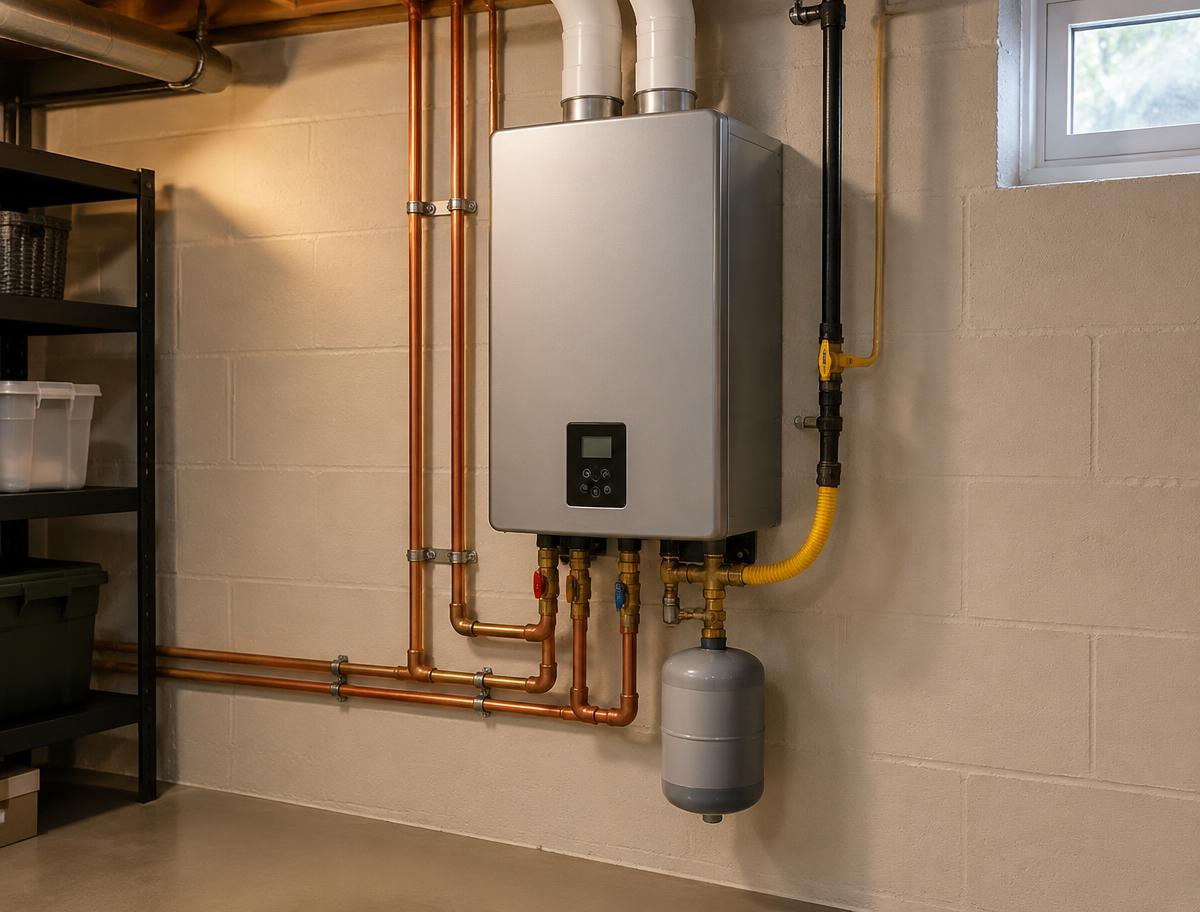
Tankless Water Heater Installation starts with a question about how you use hot water, not simply where a new appliance will fit. We look at the showers, taps and appliances you expect to run together, then relate that demand to the temperature of incoming water. Your busiest morning can matter more than the number of people listed on a request. A conversion that suits one household may feel restrictive in another with different routines.

At Etobicoke Fireplace Care, our capability to take on tankless installation is pending confirmation. We can receive your request and clarify the proposed scope, but you should not treat a submission as acceptance of the work. We also need to confirm service coverage for your address. We explain what information is needed before any installation arrangement can be considered, including whether your property is a house, condominium or shared building.

When the existing tank no longer fits your needs

You may be considering a conversion because the tank runs out during consecutive showers, occupies valuable floor space or is approaching replacement. Those concerns deserve separate investigation. A failing thermostat, a plumbing crossover or an unusually demanding fixture can produce disappointing hot water without proving that the storage format is wrong. We distinguish a capacity problem from a repair problem so the proposed change addresses the actual complaint.

We also discuss what you hope tankless equipment will change. Continuous heating does not mean unlimited flow through every fixture at once, and a different heater does not automatically remove the wait caused by long pipe runs. If you want faster delivery at a distant bathroom, we consider distribution separately. We would rather identify those limits during planning than leave you expecting an appliance change to solve an unrelated plumbing issue.

Sizing for winter inlet temperatures and simultaneous use

We consider the temperature rise the heater must deliver between incoming cold water and your selected outlet temperature. Colder seasonal inlet water can reduce the flow available at a given temperature rise. A maximum flow figure on marketing material therefore cannot stand alone as the sizing decision. We use the proposed model documentation and the household demand profile to assess whether the equipment is appropriate.

You can help by describing realistic combinations, such as two showers running while the washing machine fills. We ask about large tubs, body sprays and any planned renovations that could increase demand. We also consider low flow fixtures and whether small draws will reliably activate the proposed unit. Oversizing without examining these details can add cost without improving the experience you actually want at the tap.

Gas supply and combustion requirements come first

A gas tankless heater can have different fuel demands from the storage heater it replaces. We need an assessment of the available gas supply, the proposed appliance input and the other connected equipment. The existing pipe connection alone does not demonstrate adequate capacity. Any required gas work must be identified and handled by appropriately qualified personnel within the applicable requirements, rather than assumed to be a minor accessory to the installation.

We also examine the proposed combustion air arrangement and the suitability of the installation location. Nearby equipment, building alterations and enclosure dimensions can affect the plan. You should not disconnect gas piping or attempt a temporary connection while preparing for a conversion. If you smell gas, leave immediately and call the gas utility from outside. Do not use switches or flames, and do not use our request form for emergencies.

Venting, condensate and power shape the layout

We assess the complete vent route rather than assuming the old tank vent can be reused. Permitted materials, termination clearances and routing depend on the selected appliance and applicable installation requirements. A route that looks short from inside may conflict with an opening, property condition or shared building restriction outside. We identify these constraints before settling on a mounting position, because moving the appliance later can affect several connections.

Condensing equipment also needs a suitable condensate arrangement, with any treatment or protection required for the system and location. Electrical supply and controls deserve their own review, even when gas provides the heat. We consider access to power, drainage conditions and protection against freezing where relevant. These details influence the scope and explain why replacing a tank with tankless equipment is not always a direct exchange of two boxes.

A site review should produce a defined scope

If we confirm the capability and coverage needed for your project, the next step is to establish what a site assessment must resolve. We gather the existing heater details, inspect available connection routes and discuss access for equipment removal. We identify questions that require a trade assessment, building approval or further documentation. We do not substitute photographs for every measurement or promise a final design from a short online description.

Before proceeding, you should understand which work is included and which items remain subject to confirmation. We distinguish appliance supply, connection changes, venting, drainage, electrical coordination and removal of the former heater. We also discuss how the system would be checked and demonstrated after installation. A clear scope gives you a useful basis for deciding whether to proceed, revise the layout or compare a suitable storage replacement instead.

We also ask how you want the finished area to function after the conversion. Wall space around the appliance must remain available for the clearances and service access specified for the model. Shelving, laundry storage and future renovations should not block that access. Considering those everyday uses early helps prevent a technically possible location from becoming an inconvenient place to maintain the equipment later.

Choosing conversion, tank repair or another storage heater

We compare the condition of your current heater with the practical demands of a conversion. A repairable control fault on an otherwise suitable tank may not justify changing the whole system immediately. A leaking storage vessel generally points towards replacement, but it still does not determine whether tankless is the best replacement format. Available space, household demand and the condition of supporting connections all belong in that decision.

We avoid presenting efficiency as a guaranteed bill reduction. Actual operating costs depend on use, fuel costs, selected equipment and installation conditions. Tankless equipment also has maintenance needs, including manufacturer directed attention to scale where water conditions warrant it. We discuss those responsibilities alongside the space benefits and delivery characteristics. The useful comparison is the full ownership picture, not a promise that one technology is automatically better for every home.

What changes the installation cost

We assess cost factors through the work your property needs rather than quoting an invented standard price. Equipment selection is one component; gas supply changes, vent routing, condensate provisions and electrical work can substantially change the scope. Mounting requirements, access through finished areas and any necessary restoration also deserve attention. Where building permissions or inspection requirements apply, we clarify how they fit into the proposed project before you make a decision.

You can make comparisons more meaningful by asking for the same inclusions in each proposal. We encourage you to check whether removal, connection modifications, commissioning and user instruction are addressed. If you rent the existing heater, review the agreement with the rental provider before authorizing removal. We cannot determine another company’s cancellation terms or ownership rights from the appliance location, and those obligations should not be overlooked in your planning.

Preparing photographs, access and household arrangements

For an initial request, we ask for the model information from the accessible rating label, photographs of the heater area and a description of your concerns. Take pictures only from a safe position without opening covers or moving connected equipment. Tell us about narrow stairs, finished ceilings near the vent route and any shared utility room. If a condominium is involved, we need to know about management approvals and access restrictions before planning further.

We also suggest thinking through how your household would manage an interruption to hot water during the work. We cannot promise a particular duration before the scope is understood. Keep a clear route to the equipment and identify pets or storage that could affect access. Related requests, such as diagnosing an existing water heater problem or reviewing maintenance needs, should be listed separately so we can confirm whether they fall within an available service.

Scheduling the change before a breakdown forces decisions

Planning before the old heater fails gives you more room to examine layout choices and household needs. Winter demand can reveal limitations that were less noticeable during warmer inlet conditions, so we ask about performance across seasons. If a renovation is already planned, we discuss how access and future fixtures could affect the proposal. We do not recommend delaying a response to an active leak simply to preserve an ideal conversion schedule.

Our published business hours are 7:00 AM to 10:00 PM daily, Eastern, but those hours do not establish installation availability. When you book, you are sending a request; we reply to confirm availability and whether we can undertake the requested work. Include your address, preferred timing and a brief description of the existing system. We confirm the practical next step rather than treating a submitted form as a confirmed appointment.

Questions

Tankless Water Heater Installation FAQs

Reviews

What customers say

Shared with written permission. Source: Customer feedback form, September to October 2026.

  • At our property in Courtice, the technician talked us through the handover and operating instructions as part of tankless water heater installation. With our tankless water heater, I especially appreciated the technician checking our concerns at the start.

    Adam Graves

    Courtice, Ontario

  • My questions about tankless water heater installation were mostly about the placement and access requirements, which the technician addressed during the Newcastle visit. As someone unfamiliar with the tankless water heater, I valued the time allowed for the final walkthrough.

    Claire Gregory

    Newcastle, Ontario

  • We requested tankless water heater installation after finding the previous service paperwork; the visit in Stouffville included a helpful discussion of the proposed setup. It was reassuring to have the time allowed for the final walkthrough alongside the attention to our tankless water heater.

    Anthony Gross

    Stouffville, Ontario

  • I booked tankless water heater installation in East Gwillimbury after finding the previous service paperwork, and the installation steps was explained clearly. For this tankless water heater visit, the time allowed for the final walkthrough made the process easier to follow.

    Rachel Guthrie

    East Gwillimbury, Ontario

  • What stood out during tankless water heater installation in Georgina was the attention given to the controls on the new equipment. My partner also remarked on the time allowed for the final walkthrough during the work on our tankless water heater.

    Ethan Hale

    Georgina, Ontario

  • I wanted the connections and finishing work explained before committing to tankless water heater installation in Uxbridge, and the technician took the time to do that. What I remember most about getting help with the tankless water heater is the time allowed for the final walkthrough.

    Charlotte Hammond

    Uxbridge, Ontario

Related

Related services and brands