
Skip to content

Warm homes, honest service, right here in Etobicoke

Phone to be confirmed 146 Thirtieth Street, Suite 207, Etobicoke, ON M8W 3C4
Etobicoke Fireplace Care

Draft page, awaiting owner approval

Water Heaters

Water Heater Installation

Replacing a tank heater involves gas, venting and water connections plus disposal of the old unit. Capability pending confirmation.

Request a quote

A request only. We reply to confirm availability.

Phone or email is required.

Powered by GoogleAdding your address lets us route the nearest technician.

We use these details only to respond to your request. See our Privacy Policy. Smell gas? Leave and call your gas utility, do not use this form.

Signs to watch

Symptoms and when to stop using it

  • Failed tank

Shut off the water heater and its supply if it leaks heavily, smells of gas, or the relief valve discharges repeatedly. Gas odours call for leaving and calling the utility.

Scope

What the visit covers, and what it does not

Typically included

  • Consultation (pending)

Not included

  • Installation until confirmed

Service scope, coverage and technician qualifications for this work are awaiting owner confirmation.

Water Heater Installation

Everything you should know

Planning a water heater replacement before the next cold shower

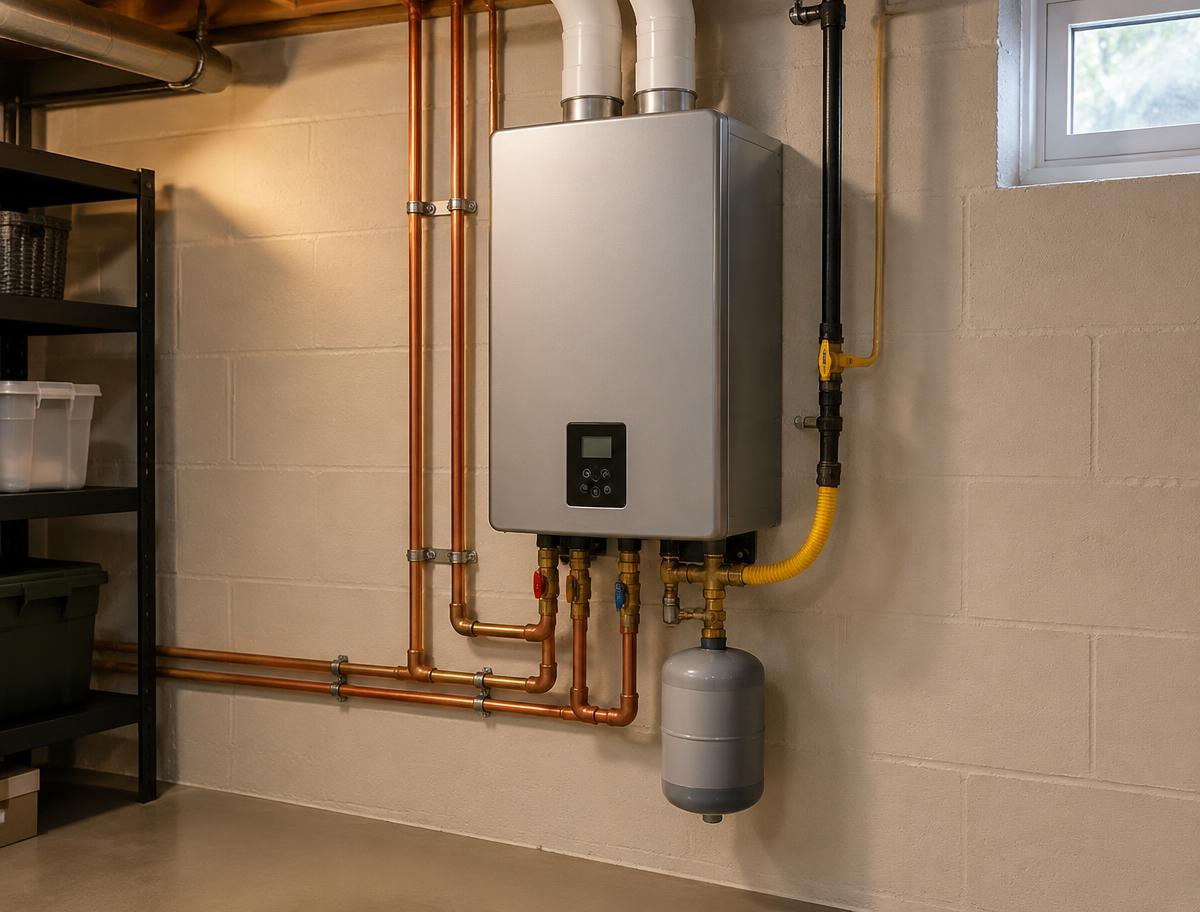
Water Heater Installation is not simply a matter of exchanging one tank for another. The replacement must suit your household demand, the existing water connections, the available space and, for gas equipment, the approved venting arrangement. We start with those practical questions rather than assuming that a heater with the same stated capacity will fit or perform appropriately. Our capability to provide water heater installation is pending confirmation, so please treat an enquiry as a request for review, not an accepted installation job.

You may be researching a replacement after finding a failed tank, or trying to plan ahead while your current unit still operates. Either situation benefits from gathering the equipment details before choosing a new heater. We can review the information you submit and explain whether we can take the request further. If an installation cannot be offered, you will still have a clearer description of your equipment and the questions that need answers before work proceeds.

Distinguishing a worn tank from a repairable complaint

A puddle near a water heater deserves attention, but its location alone does not establish that the storage tank has failed. Water may originate at a connection, a nearby pipe or another component. Reduced hot water can likewise reflect a control problem, changing household use or a fault that requires diagnosis. We ask what you observed, when it began and whether the problem is continuous, because an installation decision should follow an assessment of the actual condition.

A leaking tank body generally raises different replacement considerations from a serviceable unit with an isolated component fault. Repeated interruptions, corrosion visible from a safe distance and difficulty obtaining suitable parts may also affect the discussion. We do not diagnose the appliance solely from its age or a photograph. If water is approaching electrical equipment or creating unsafe access, stay clear and seek appropriate urgent help rather than entering the affected space to collect more details.

Matching storage and recovery to the household

The right replacement depends on how you use hot water, not just how many people live at the address. Closely spaced showers, a large bath and laundry running during busy mornings can create a very different load from the same activities spread throughout the day. We ask about the periods when hot water runs short and whether your household has changed since the existing heater was selected. That context helps frame a sensible capacity conversation.

Storage volume is only one part of performance. Recovery capability, the incoming water temperature and the distribution layout can influence what you experience at a fixture. Choosing a larger tank without checking the available space or fuel requirements can introduce avoidable complications. If you are considering a different type of system, we would first need to confirm whether that work is within our available capability. We do not present a conversion as an automatic substitute for a straightforward tank replacement.

The installation space needs its own assessment

Before a replacement can be scoped, the route into the mechanical area matters as much as the spot where the tank stands. We ask about stairs, narrow doors, finished flooring and any cabinets built around the existing unit. The proposed appliance needs appropriate access and the clearances specified for that model. A newer heater may have different dimensions or connection positions even when its advertised capacity resembles the old one.

The surrounding area can also reveal changes that affect the work. Renovations may have enclosed a previously open utility space, while stored belongings can obstruct inspection or equipment removal. We would need to assess the installation against the applicable requirements rather than assume the old arrangement remains acceptable. You can help by sending a broad photograph of the room alongside the equipment label, provided both can be obtained safely without moving the heater or removing covers.

Gas supply and venting cannot be treated as incidental

For a gas water heater, the appliance and its venting system must be considered together. The replacement model may require a vent arrangement that differs from the existing one. Shared venting, the condition of accessible vent components and the route to an approved termination can all affect feasibility. We would need a suitable assessment before describing any existing vent as reusable. A similar appearance does not establish compatibility between different heaters.

Gas connections and combustion related checks are not homeowner preparation tasks. Do not loosen fittings, alter vent sections or attempt to adapt a connection while waiting for a response. If you smell gas, leave immediately and call the gas utility from outside. Do not use switches or flames. Do not use the request form for emergencies. A replacement enquiry is a planning channel, not a substitute for immediate assistance when there may be a fuel leak.

What a properly scoped replacement would cover

If our installation capability and your request are confirmed as suitable, the proposed scope should identify the heater being considered and the work necessary to connect it appropriately. That can include removal of the old equipment, water connection changes, gas and venting work where applicable, and any required electrical provision. We would distinguish the expected replacement tasks from additional issues discovered during assessment. This prevents a vague request for a new tank from hiding important practical differences.

The work sequence also needs to account for shutting down the existing equipment, managing water safely and checking the completed installation before it is placed in use. Applicable permit, inspection and documentation requirements should be clarified for the actual project. We would not promise that every property can be handled through an identical process. Access limitations, an unsuitable existing arrangement or a change in equipment type may require a revised scope before anyone proceeds.

Understanding the factors behind an installation estimate

Installation cost is influenced by much more than the heater itself. Equipment type, tank size, the removal route and the condition of existing connections all matter. Venting changes, access restrictions and work needed to bring the proposed installation into an appropriate arrangement can add complexity. We need enough property information to distinguish a relatively direct replacement from a project involving broader modifications. Without that context, a quoted figure could leave out essential work.

Ownership arrangements deserve attention as well. If your existing water heater is rented or covered by a separate agreement, check the agreement before authorizing removal or disposal. We cannot interpret those terms or assume permission to remove equipment owned by another party. Ask who is responsible for collection, outstanding obligations and any required notifications. Keeping those administrative questions separate from the physical installation helps you understand what a proposed scope does and does not include.

Preparing your home without touching the appliance

The most useful preparation is information gathering. Share the make, model, approximate age if known, fuel type and a description of the problem. Explain whether the heater is currently providing hot water and whether there is visible leakage. Photographs of the rating plate and surrounding area can help when they are easy to take safely. We may need additional details before determining whether we can consider the installation request.

For a potential visit, identify the normal entrance and mention stairs, parking restrictions, pets or building access requirements. Move ordinary stored belongings away from the approach only if it is safe to do so, and protect access to other essential equipment. Do not drain the tank, disconnect piping or remove venting as preparation. We would discuss any interruption to hot water through the confirmed scope rather than ask you to disable the appliance in anticipation of an unconfirmed booking.

Timing the project around your household and building

A working heater gives you more room to compare options and organize access than a tank that has already stopped serving the home. Consider the impact of hot water interruption on bathing, laundry and any household member with additional needs. We cannot promise a particular installation date or duration before reviewing the project. Sending a request early can help establish what information is needed, but it does not reserve a place on a schedule.

Seasonal conditions can affect access and planning, especially where equipment must travel along an exterior path or vent work requires outdoor access. In a condominium or managed property, ask about contractor entry, elevator arrangements and restrictions on water shutdowns. You may also need approval for changes involving shared systems. We ask you to flag these constraints at the enquiry stage so that a potential project is not planned around access or permissions that have not been obtained.

Keeping installation separate from other equipment concerns

A water heater request sometimes arrives alongside a furnace or fireplace concern because the appliances share a utility area. We keep the equipment descriptions separate so that symptoms are not incorrectly attributed to the wrong appliance. If you also need fireplace maintenance or gas fireplace troubleshooting, mention that as a distinct request. Any additional service would need its own capability and availability confirmation rather than being assumed to form part of a water heater installation.

After any replacement, retain the model information, operating instructions and installation paperwork supplied for the equipment. Ask about the maintenance expectations for the specific heater rather than applying advice from a different model. We encourage you to understand normal operation and the appropriate route for reporting a problem, without attempting internal servicing yourself. To begin the conversation with us, submit your property details and equipment information. We reply to clarify capability and availability before any appointment can be confirmed.

Questions

Water Heater Installation FAQs

Reviews

What customers say

Shared with written permission. Source: Customer feedback form, September to October 2026.

  • We requested water heater installation after finding the previous service paperwork; the visit in Ajax included a helpful discussion of the handover and operating instructions. Beyond the work on the water heater, the opportunity to ask follow-up questions left a good impression.

    Samuel Kemp

    Ajax, Ontario

  • For our home in Pickering, water heater installation started with a useful conversation about the placement and access requirements. The water heater work was easier to understand because of the way the appointment was coordinated.

    Victoria Kendall

    Pickering, Ontario

  • Our Whitby appointment for water heater installation gave us a much better understanding of the proposed setup. We finished the water heater appointment feeling positive about the way the appointment was coordinated.

    Nathan Kent

    Whitby, Ontario

  • The visit to our Oshawa home covered water heater installation, with particular care around the installation steps. The most helpful part of the water heater appointment was the way the appointment was coordinated.

    Chloe Kirby

    Oshawa, Ontario

  • At our property in Clarington, the technician talked us through the controls on the new equipment as part of water heater installation. I would mention the way the appointment was coordinated to anyone asking how our water heater appointment went.

    Adam Klein

    Clarington, Ontario

  • Having water heater installation organised for our Bowmanville home made it easier to get clear answers about the connections and finishing work. The way the appointment was coordinated helped us feel comfortable with the work on the water heater.

    Claire Lambert

    Bowmanville, Ontario

Related

Related services and brands